
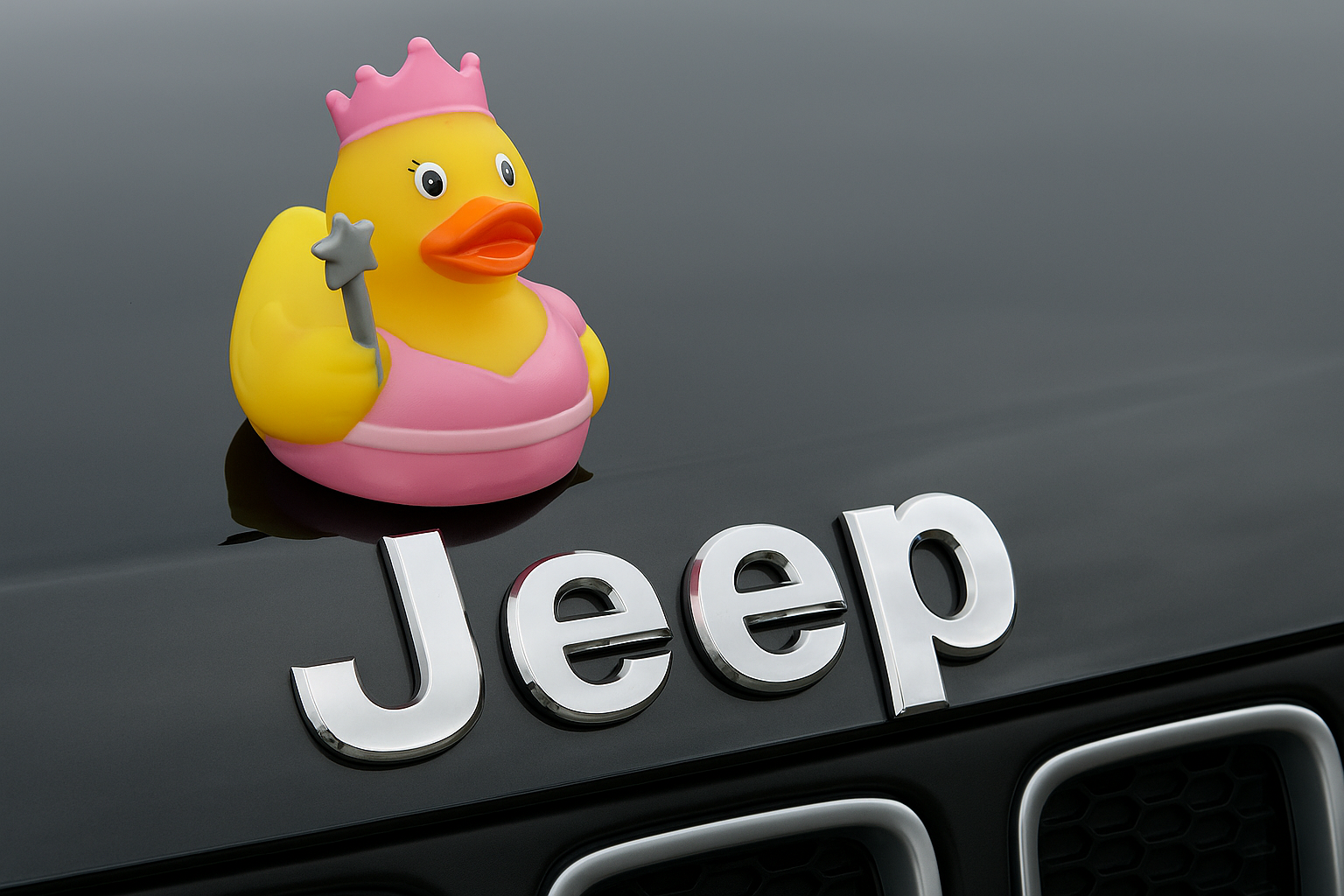
If you spot a rubber duck sitting on the hood of a Jeep, that’s not a prank. Jeep ducking (also called Duck Duck Jeep) is simple: one Jeep owner leaves a small rubber duck on another Jeep, often with a note like “Nice Jeep” or “You’ve been ducked.”
It started in 2020 as a kind gesture between strangers and has since spread around the world. From the outside, it can look just playful and fun. But from a marketing perspective, ducking is a brilliant strategy.
Why Ducking Works
1. Customers become brand ambassadors.
Each duck is a mini act of advocacy. One owner recognizing another’s car builds a sense of belonging and positive association.
2. It fuels organic content.
People love posting photos of ducks on Jeeps. Hashtags like #DuckDuckJeep keep the tradition visible, turning everyday moments into social media reach.
3. It strengthens community and loyalty.
Jeep has always been about lifestyle and tribe, not only cars. Ducking is a ritual that deepens that bond. Even without words, it says: “You’re part of this.”
4. It humanizes the brand.
Rubber ducks are silly and fun. Pairing that with a rugged off-road vehicle creates contrast that makes Jeep feel approachable and human.
5. It builds brand culture naturally.
Because ducking feels grassroots, it doesn’t come off as corporate messaging. Jeep only had to embrace it lightly, and the community does the rest.
From Tradition to Brand Asset
The origin story is key: one person started it to spread positivity, and it grew through word of mouth and social media. Now Jeep highlights it on official channels, especially in markets like the UK. That balance between community-led and brand-supported is what makes it so effective.
Ducking works because it’s simple, joyful, and authentic. It costs almost nothing, but creates recognition, conversation, and connection. For marketers, this is a great example of how culture and branding intersect: one small rubber duck, multiplied into millions of moments of brand love.